M
03
Program

A convenience store, rebuilt as a classroom.

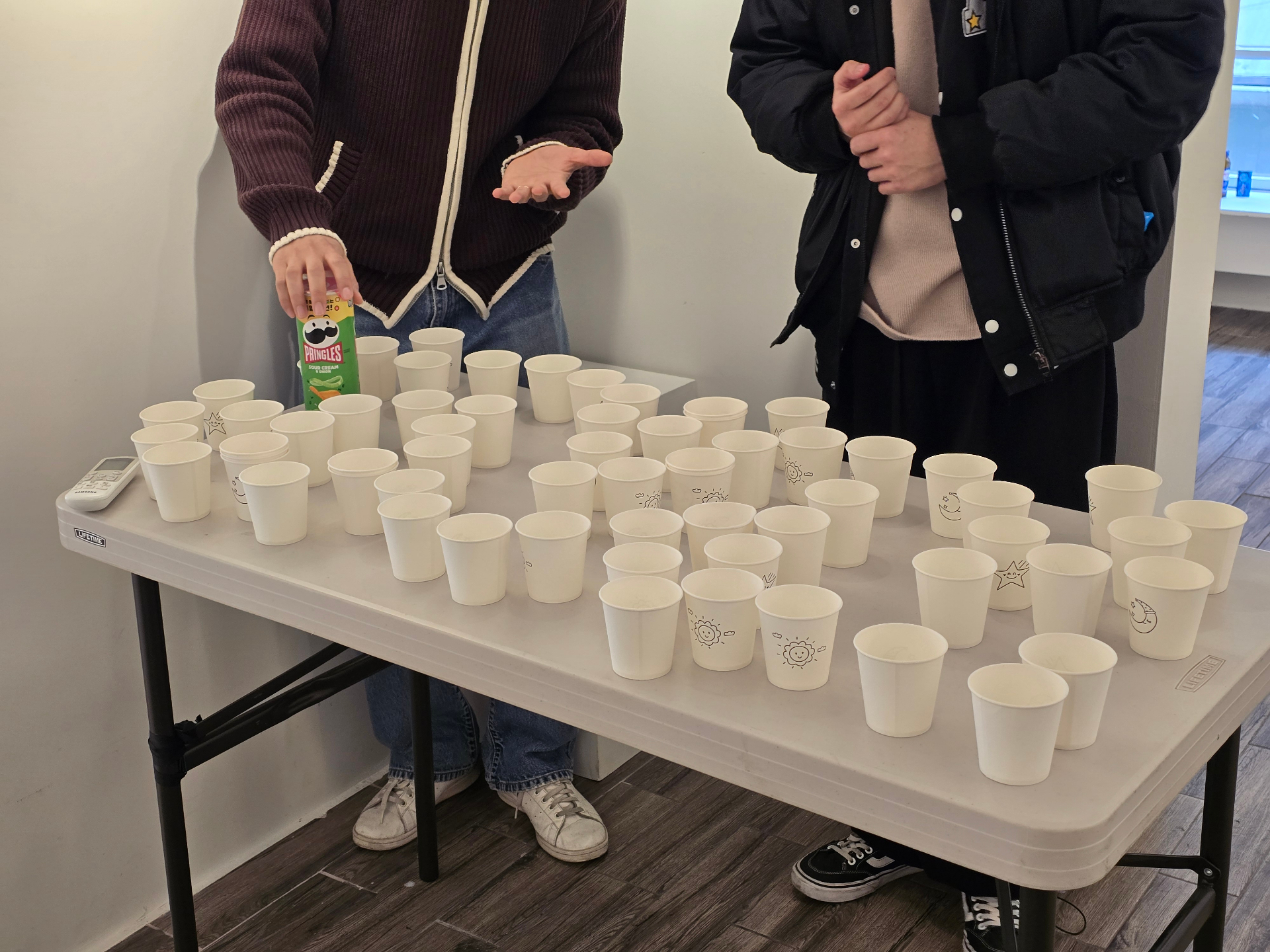
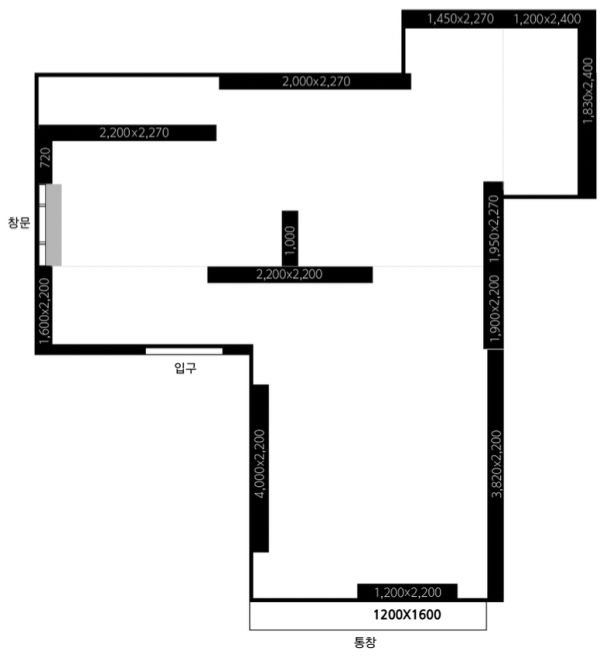
The space was divided into experience zones. Visitors entered, received instructions, then moved between mission stations placed among the shelves — completing small, realistic tasks in each one.

Floor plan of the pop-up store

Fig. 02 — Floor plan

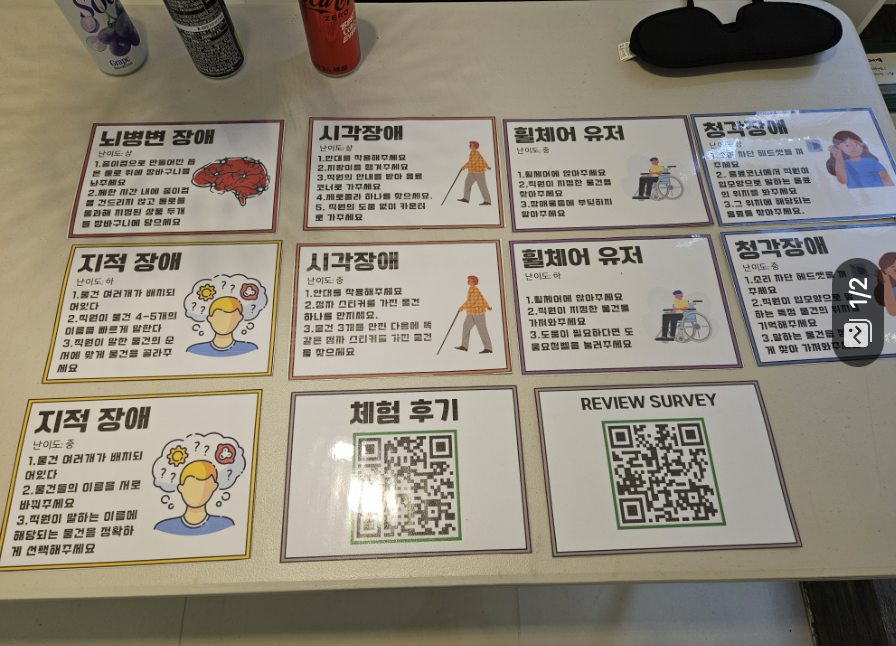
Mission cards for each disability

Fig. 03 — Mission cards for each disability

Five missions, five perspectives.

Each mission card explained the task and its difficulty level — kept short, kept physical, kept honest.

Visual impairment mission
M.01Mission

Visual impairment

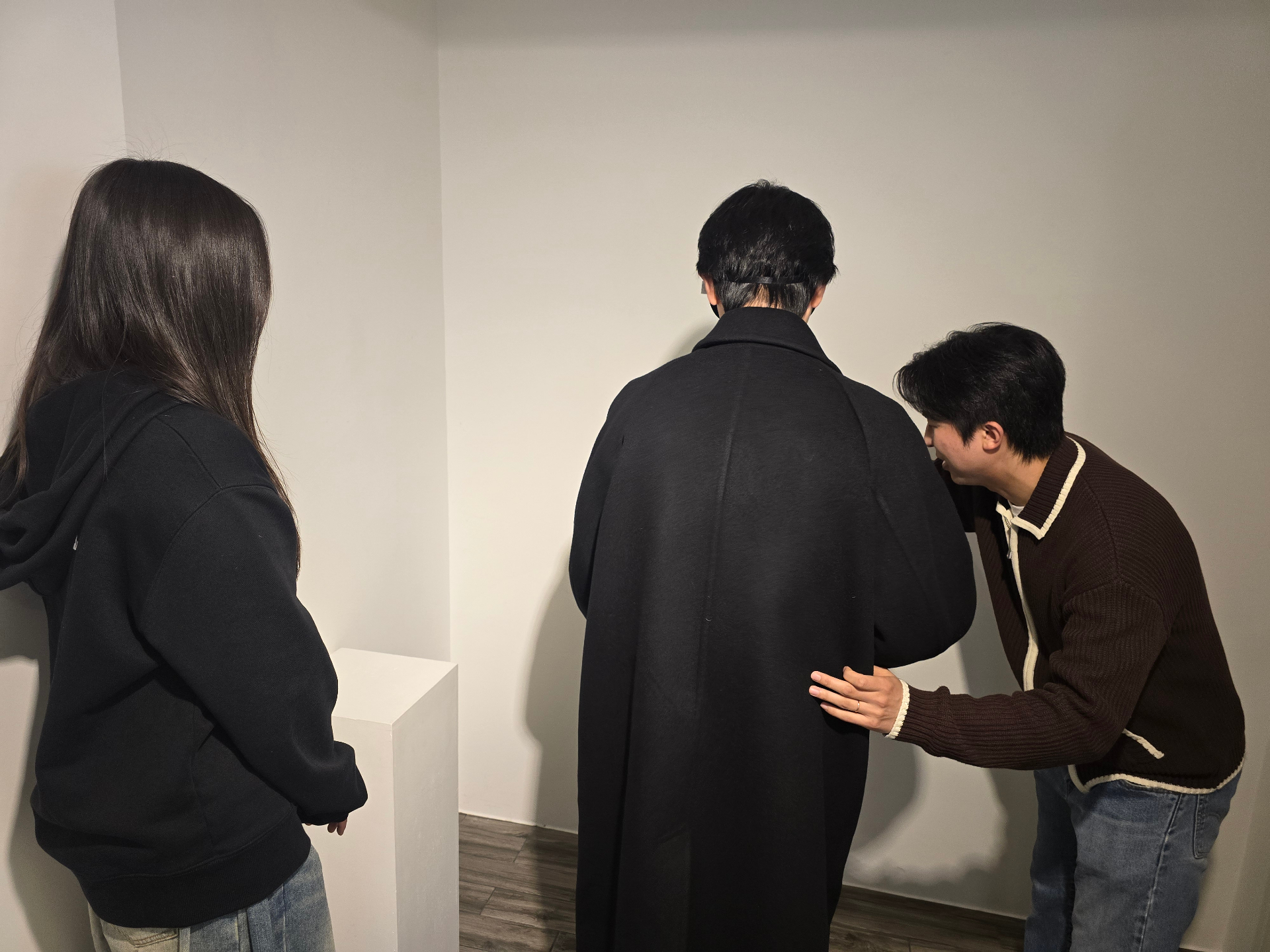
Blindfolded and using a cane, participants are guided to the drink section and asked to find a specific product (e.g. zero cola) without bumping into shelves. A second variant uses braille stickers — find the matching object using touch alone.
Hearing impairment mission

Upload to replace

M.02Mission

Hearing impairment

Wearing noise-blocking headphones, participants must understand a staff member who communicates using only lip movements, then locate the correct item in store.

Wheelchair mobility mission
M.03Mission

Wheelchair mobility

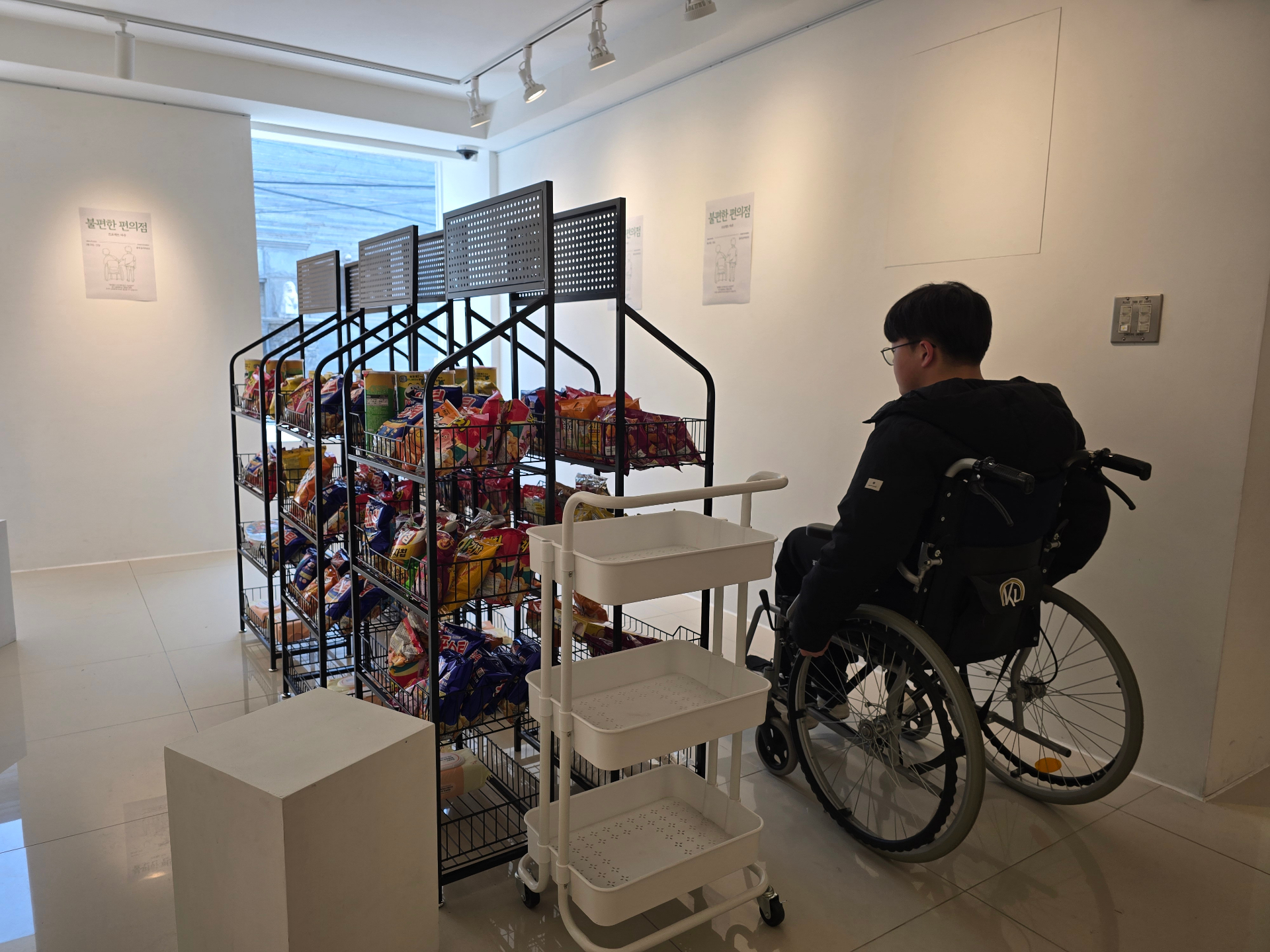
Seated in a wheelchair, participants navigate around obstacles and reach for shelves placed deliberately high or awkwardly — a small lesson in how built environments dictate access.

Intellectual disability mission
M.04Mission

Intellectual disability

Product names are swapped or sequenced; participants must remember a series of items and select them in the right order, mirroring the cognitive load of unfamiliar systems.

Brain lesion mission
M.05Mission

Brain lesion disability

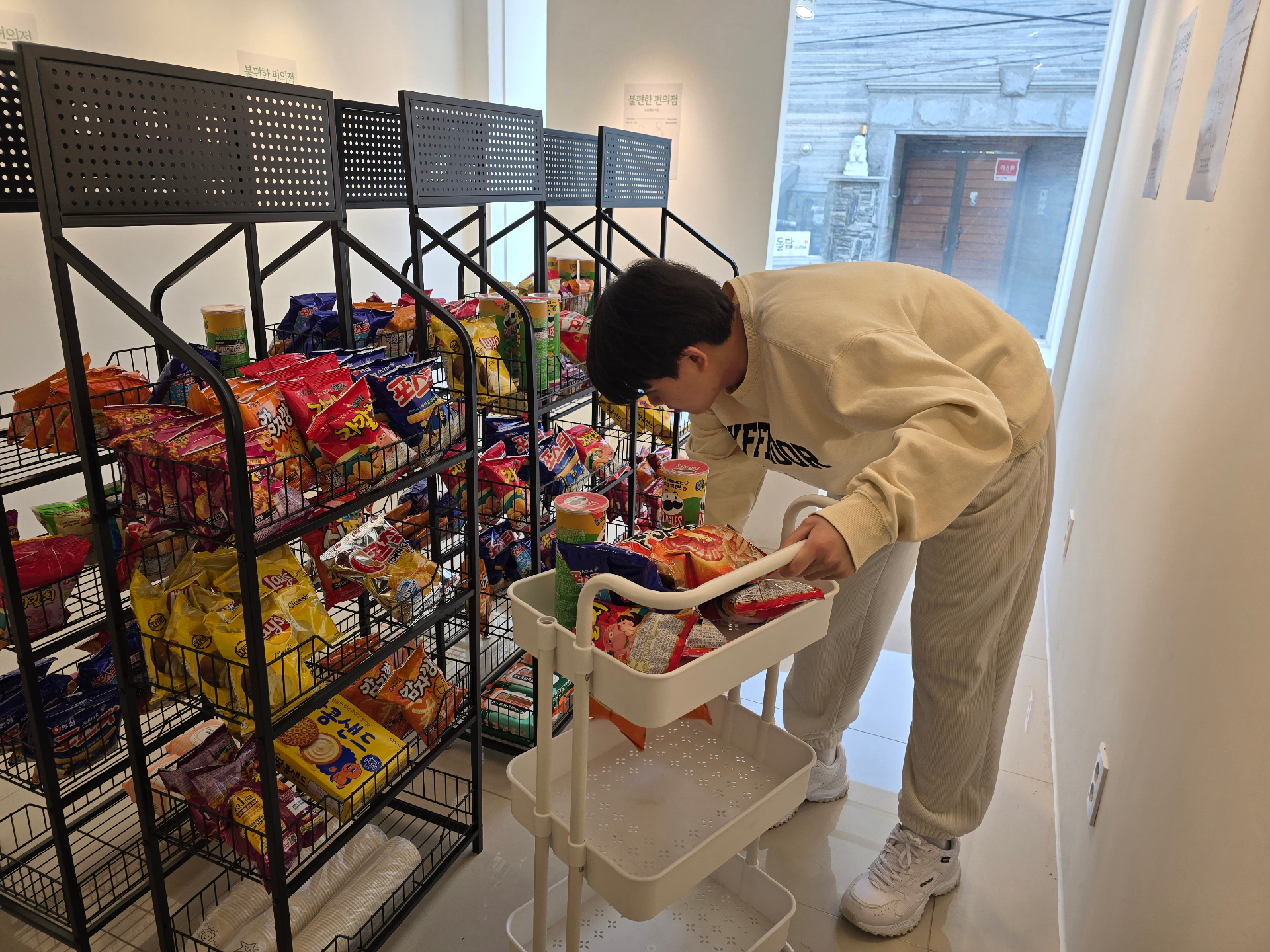
Carrying a basket through a narrow path, participants must avoid touching obstacles within a tight time limit — simulating the difficulty of fine motor control under pressure.